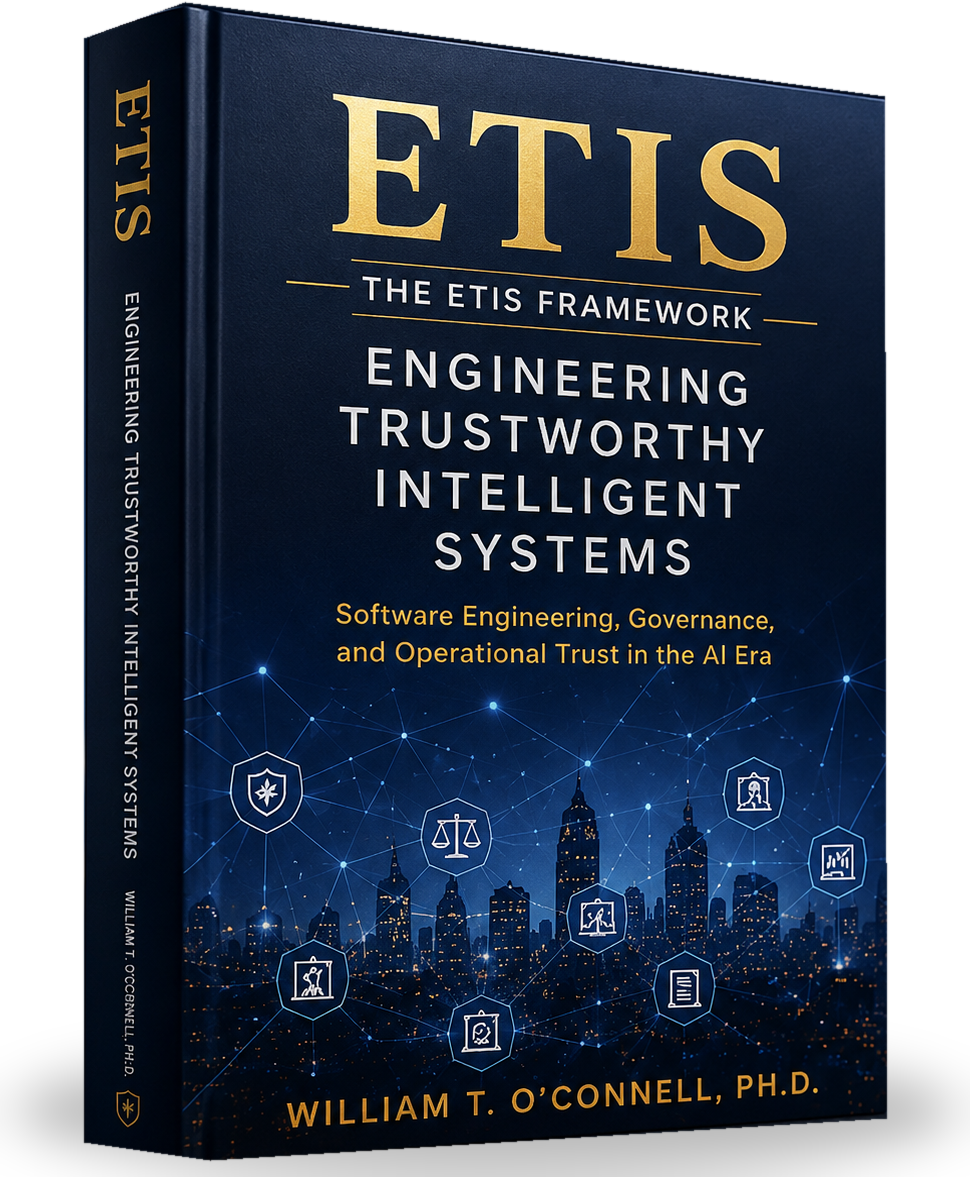
Engineering Trustworthy
Intelligent Systems
Software Engineering, Governance,
and Operational Trust in the AI Era
ETIS is an engineering framework for building, governing, operating, and continuously improving trustworthy intelligent systems.
The ETIS ecosystem provides books, publications, educational resources, the Engineering Platform, and an integrated Engineering Education Suite for phase-gate readiness, engineering-judgment development, and instructor-led review.
Read the Framework. Learn the discipline. Apply it through the Engineering Platform.
Why ETIS?
AI has changed software engineering: trust must be engineered—not assumed.
- AI accelerates engineering risk.
- Trustworthy systems require disciplined engineering.
- Governance is architecture, not an afterthought.
- Evidence creates accountability and enables trust.
- Human judgment, verification, and oversight remain essential.
Start with Why ETIS? to understand the engineering challenge. Then continue with What is ETIS? for a plain-language introduction to the framework.
ETIS Core Principles
AI can propose, but engineers are responsible for verification, validation, and outcomes.
Governance is not overhead; it is the architecture that enables trust and controls risk.
Meaning, intent, and context determine how systems behave and how decisions should be made.
If it is not documented, it did not happen in a reviewable way.
Models are components. The system includes data, interfaces, people, and processes.
Demos impress. Operations prove. Operational trust is earned over time.
The ETIS Framework
A four-part framework covering the full lifecycle of trustworthy intelligent systems.
FoundationsPrinciples, context, and the engineering mindset.

Engineering PracticeRequirements, architecture, planning, implementation, verification, and delivery.

Operational TrustIncidents, observability, security, reliability, governance, and release authority.

Trustworthy Intelligent SystemsAgentic systems, context engineering, oversight, stewardship, and engineering identity.
 Explore the full table of contents →
Repository-Centered Engineering
ETIS uses a repository as the system of record. Every important decision, artifact, and outcome is captured, linked, and preserved.
Everything important leaves evidence.
Engineering Principles
Repository-centered engineering is guided by the following engineering principles.
Applying ETIS Through the Engineering Platform
The Framework defines the engineering discipline. The Engineering Platform demonstrates how disciplined engineering is applied through Engineering Stages ES-100–ES-114, reusable templates, reference examples, governance assets, and Project Workspace patterns.
Complementary educational engineering tooling further supports repository-centered engineering by helping students strengthen engineering repositories before formal review and helping instructors perform consistent evidence-centered engineering evaluations.
Read the Framework to understand ETIS. Explore the Platform to learn how to apply it. Launch the Engineering Platform when you're ready to begin.